ConsentPixel – Privacy · Verified

AI Consent

AI Consent: Consent That Keeps Up With AI

Cookie consent was built for trackers and has a blind spot for AI. This category is about closing it — disclosing AI, consenting to AI data use, and proving both.

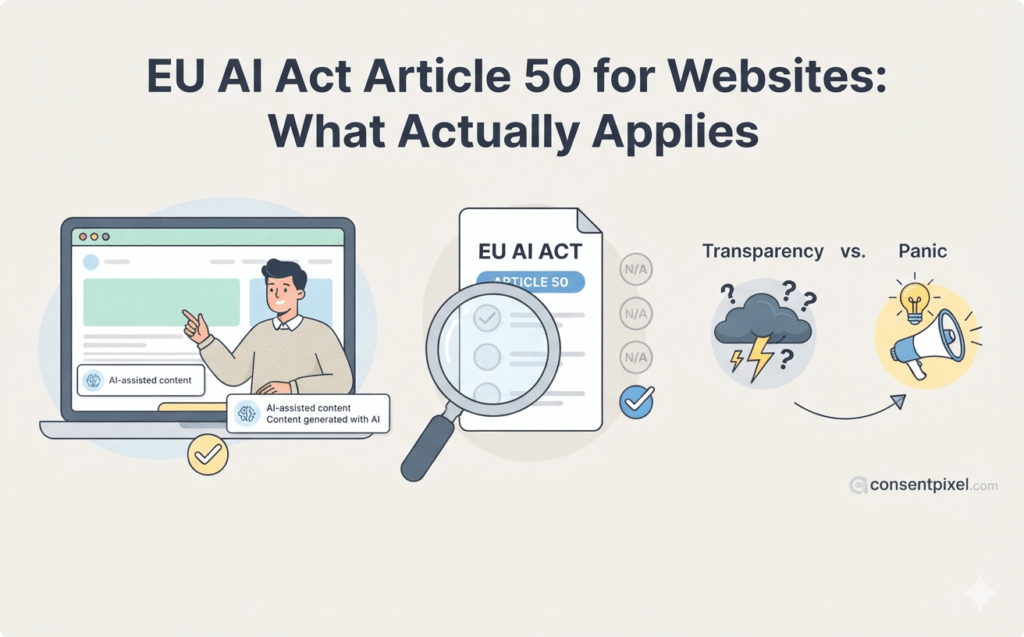
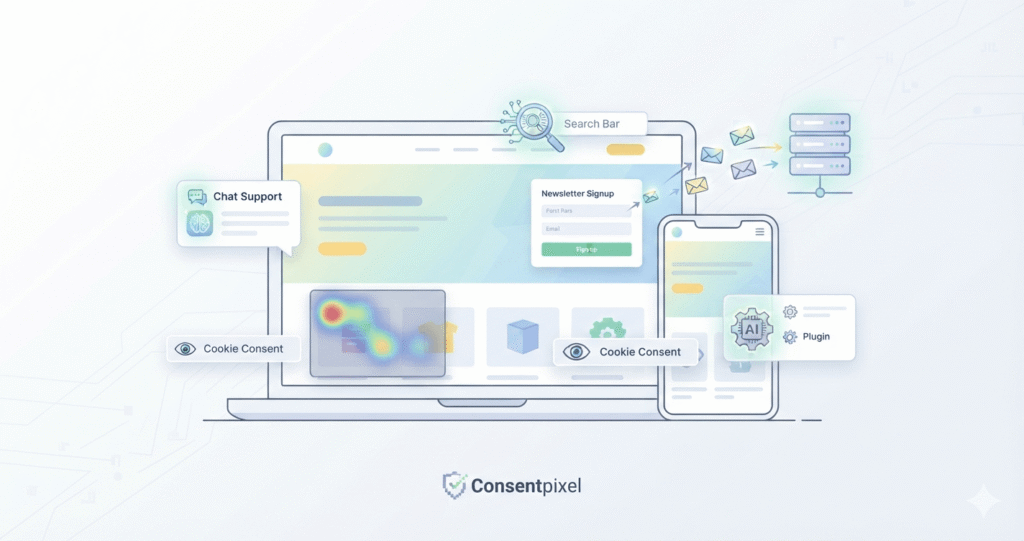
Websites now do something consent banners were never designed to ask about: they feed visitor data into AI. Chatbots, AI search, recommendation engines and scoring tools all process what visitors say and do — and an AI chat widget can transmit a conversation to a third-party model before anyone consents. AI-aware consent is the emerging discipline that treats AI as its own consent purpose: disclose the AI, get a specific consent for the data use, and keep provable evidence.

This category maps the fast-moving law and practice around it — the EU AI Act’s Article 50 disclosure duty, GDPR consent for AI processing, the US chatbot-disclosure patchwork, and the CIPA wiretapping angle that a disclaimer alone doesn’t solve. It’s written for site owners deciding what actually applies to them, not for lawyers.

AI Disclosure vs AI Consent: The Two Duties Websites Keep Confusing
AI Consent

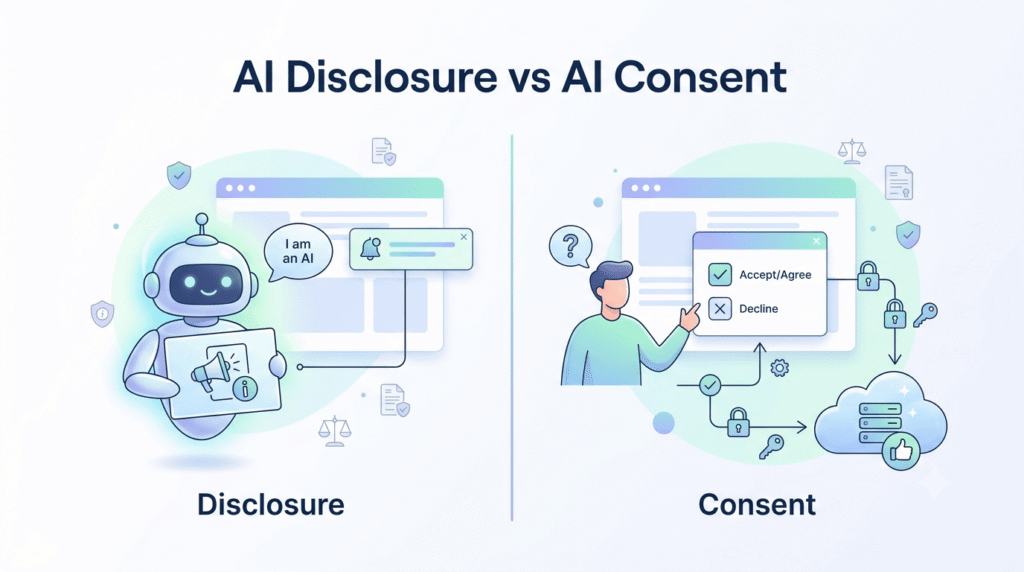
AI Disclosure vs AI Consent: The Two Duties Websites Confuse

There’s a quiet mistake spreading across the web in 2026: businesses add “this is an AI assistant” to their chatbot and believe they’ve handled AI compliance. They’ve handled disclosure — one of two separate duties. The other is consent: whether that AI may process a visitor’s data before they’ve agreed. And that second duty is turning into the next website-litigation wave, because AI chat is the new session replay. Here’s the map, and why one notice isn’t enough.

AI Disclosure vs AI Consent: The Two Duties Websites Confuse Read Post »

Ketch vs ConsentPixel for AI Consent: Enterprise Pipeline vs Browser-Side
AI Consent

AI Consent Management Platform: Ketch vs ConsentPixel

If you’re shopping for an AI consent management platform, Ketch and ConsentPixel will both show up — and comparing them head-to-head is a little like comparing a data-center HVAC system to a smart thermostat. Both control the same thing; they operate at completely different altitudes. Ketch is enterprise, server-side AI governance for companies building AI products. ConsentPixel is a browser-side, detection-first consent layer for the far larger group of businesses that simply use AI through widgets and plugins. This is an honest look at where the line falls — including where Ketch is the better choice.

AI Consent Management Platform: Ketch vs ConsentPixel Read Post »

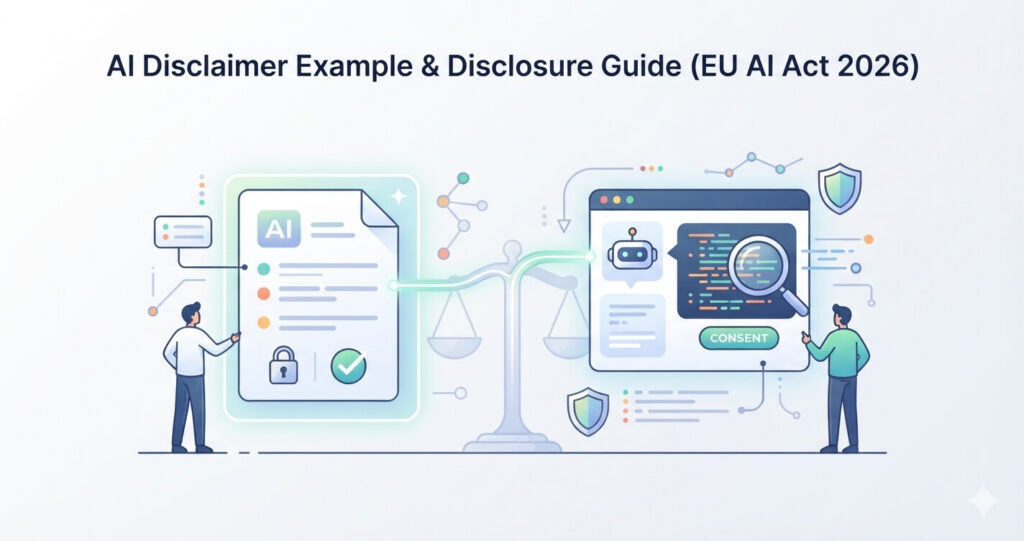
AI Disclaimer Example & Disclosure Guide (EU AI Act 2026)
AI Consent, Privacy

AI Disclaimer Example & Disclosure Guide (EU AI Act 2026)

Looking for an AI disclaimer example you can actually use? You’ll find copy-paste wording below — but first, a warning that most template pages skip: “AI disclaimer” means two completely different things, they’re governed by different laws, and getting the wrong one is worse than having none. This guide gives you both sets of examples, shows exactly which the EU AI Act, US state laws, and California’s wiretapping law require, and explains why a disclaimer alone doesn’t finish the job.

AI Disclaimer Example & Disclosure Guide (EU AI Act 2026) Read Post »

AI Chatbots and Privacy Law: What CIPA, GDPR and the AI Act All Require
AI Consent

AI Chatbot Privacy Compliance: CIPA, GDPR & the AI Act

The chat widget you added in ten minutes is, legally, three problems at once. AI chatbot privacy compliance isn’t one box to tick — a single conversation can trigger California’s wiretapping law, the GDPR, and the EU AI Act simultaneously, and each demands something different. The trap most sites fall into is satisfying one and assuming they’ve handled the rest. This is the practitioner’s guide to what all three actually require, where the live lawsuits are, and how to clear them together.

AI Chatbot Privacy Compliance: CIPA, GDPR & the AI Act Read Post »

What Is AI-Aware Consent?
AI Consent

What Is AI-Aware Consent? (And Why Cookie Consent Misses It)

Your cookie banner was designed to answer one question: may we run these trackers? But websites now do something the banner was never built to ask about — they feed visitor data into AI. Chatbots, AI search, recommendation engines, and scoring tools all process what visitors say and do, and a consent banner that only knows about “analytics” and “advertising” has a blind spot exactly where the new risk is. AI-aware consent closes that blind spot.

What Is AI-Aware Consent? (And Why Cookie Consent Misses It) Read Post »

Scroll to Top