ConsentPixel – Privacy · Verified

Healthcare Privacy

Healthcare Privacy: Pixels, HIPAA & Patient Data

Healthcare sites face the highest-stakes version of the tracking problem — where an ad pixel on a patient page can turn routine analytics into a major settlement.

Healthcare is where website tracking risk is most acute. When ad pixels, session-replay tools or analytics scripts run on pages that touch patient information — appointment booking, symptom checkers, patient portals — they can transmit sensitive health data to third parties, colliding with HIPAA and fueling a wave of multi-million-dollar settlements against hospitals and health systems.

This category covers the healthcare-specific privacy landscape: the pixel-and-portal litigation, why common tools like Microsoft Clarity and Hotjar shouldn’t run on pages rendering health information, what HIPAA expects of a website, and how providers can keep the digital experience they need without exposing patient data. The stakes are higher here, and so is the standard.

Healthcare Pixel Settlements in 2026: The Payouts — and What a CMP Actually Governs
Healthcare

Healthcare Pixel Settlements 2026: The Payouts, Explained

The healthcare pixel settlement wave has crossed from a trickle of filings into a steady stream of nine-figure payouts. Kaiser Permanente alone agreed to as much as $47.5 million; Sutter, Advocate Aurora, Mass General Brigham and Penn Medicine each settled in the eight figures; and a 2026 wave of smaller systems is settling every month. Almost none of these were private HIPAA lawsuits. This is the full roundup — the amounts, why they settle the way they do, and the honest limits of what a consent tool can and can’t fix.

Healthcare Pixel Settlements 2026: The Payouts, Explained Read Post »
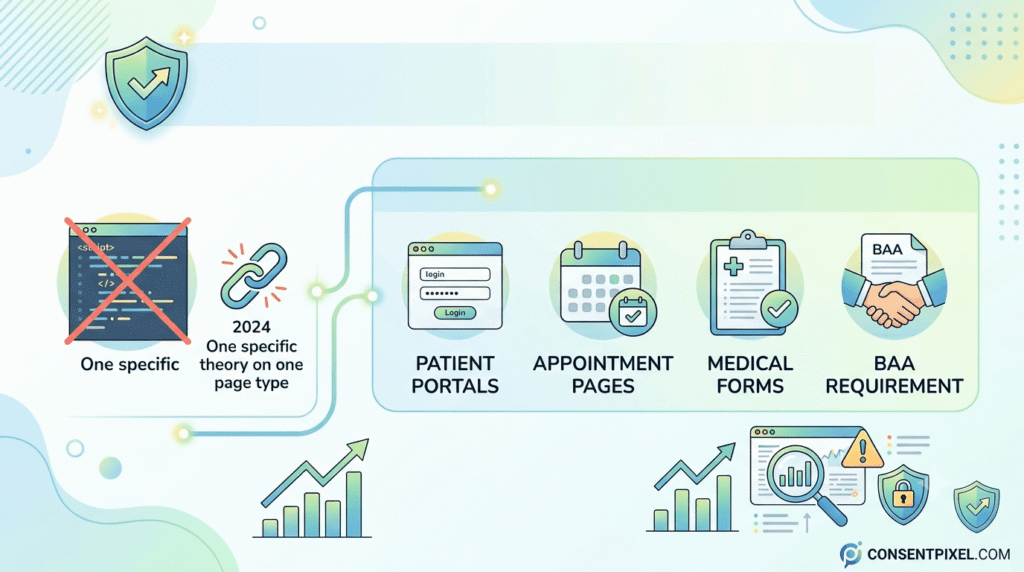
HHS OCR Tracking Guidance in 2026: What Still Applies After AHA v. Becerra
Healthcare

HHS OCR Tracking Guidance in 2026: After AHA v. Becerra

The HHS OCR tracking guidance is the most misread document in healthcare privacy. A 2024 court ruling, AHA v. Becerra, struck down part of it — and headlines turned that into “tracking is fine now.” It isn’t. The vacatur was narrow and specific: it removed one theory about one kind of page. Everything else — patient portals, forms, appointment pages, the BAA requirement — still stands, and in 2026 OCR’s scrutiny has only intensified. Here’s exactly what the guidance requires now.

HHS OCR Tracking Guidance in 2026: After AHA v. Becerra Read Post »

HIPAA-Compliant Analytics: The Real Options — and Is Google Translate HIPAA Compliant?
Healthcare

Is Google Translate HIPAA Compliant? The Real Tool Rules

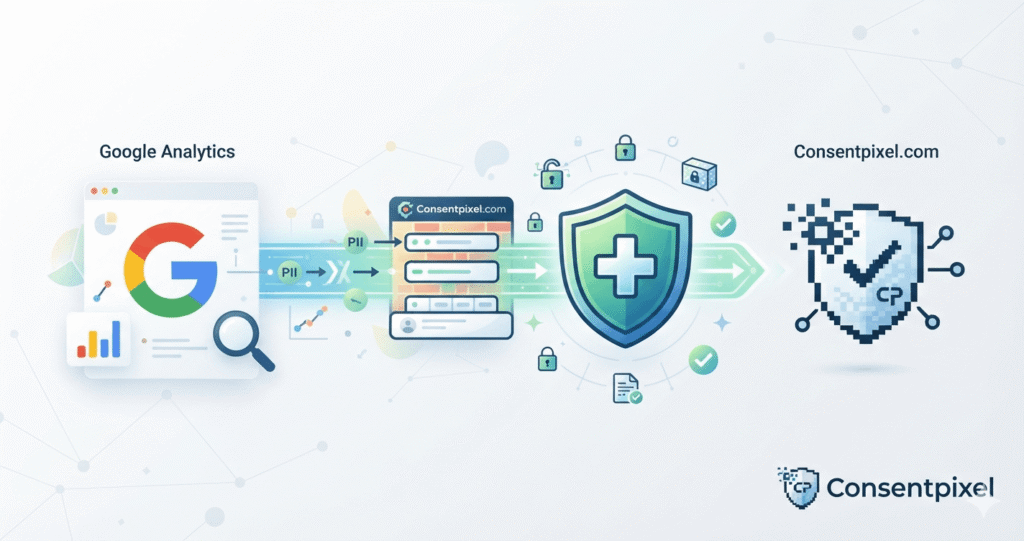
Short answer to the question everyone searches: is Google Translate HIPAA compliant? The free version — no. And the reason why is the same test that tells you whether any tool is safe for patient data, from Google Analytics to Zoom to your appointment scheduler. This guide gives you that test, runs the common tools through it, and covers the half most “HIPAA-compliant analytics” guides skip: even a BAA-covered tool still has to answer for consent.

Is Google Translate HIPAA Compliant? The Real Tool Rules Read Post »

Session Replay in Healthcare: The Patient-Portal Risk
Healthcare

Session Replay in Healthcare: The Patient-Portal Risk

Of all the ways to get website tracking wrong, running session replay in healthcare on a patient portal is the single most dangerous. Behind a login, the visitor isn’t anonymous — they’re a known patient, and everything they do is protected health information. A replay tool recording that session sends a video-like reconstruction of a patient’s private medical activity to a third-party vendor. And the 2024 court ruling that healthcare marketers keep citing as relief? It doesn’t reach the portal at all.

Session Replay in Healthcare: The Patient-Portal Risk Read Post »

Is Your Website Platform HIPAA-Ready? (Shopify, Wix, WordPress)
Healthcare

Is Your Website Platform HIPAA-Ready? (Shopify, Wix, WordPress)

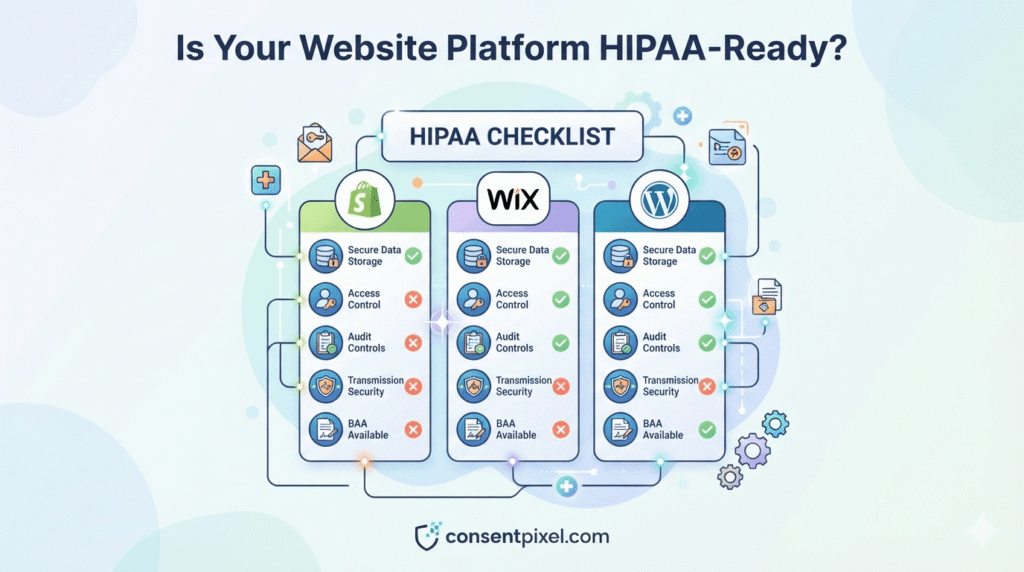
“Is Shopify HIPAA compliant? Is Wix? Is WordPress?” It’s one of the most-searched questions in healthcare web — and it has a frustrating answer: none of them is “HIPAA compliant” on its own, and none of them can be. Compliance isn’t a feature a platform ships; it’s something a business builds on top of one. Here’s the honest, up-to-date picture for 2026 — what each platform will and won’t do, what actually changed this year, and the separate privacy problem that catches even sites handling no patient records at all.

Is Your Website Platform HIPAA-Ready? (Shopify, Wix, WordPress) Read Post »

When Do You Actually Need a BAA for Web Trackers?
Healthcare

When Is a Business Associate Agreement Required for Web Trackers?

Every healthcare vendor pitch eventually says the letters “BAA.” Fewer will tell you plainly when a business associate agreement is actually required for the trackers on your website — and when it isn’t. This is the honest version: what triggers a BAA, why Google and Meta won’t sign one for their ad products, and what a cookie banner can and can’t do.

When Is a Business Associate Agreement Required for Web Trackers? Read Post »

When Does State Privacy Law Supersede HIPAA?
Healthcare

When Does State Privacy Law Supersede HIPAA? (2026 Guide)

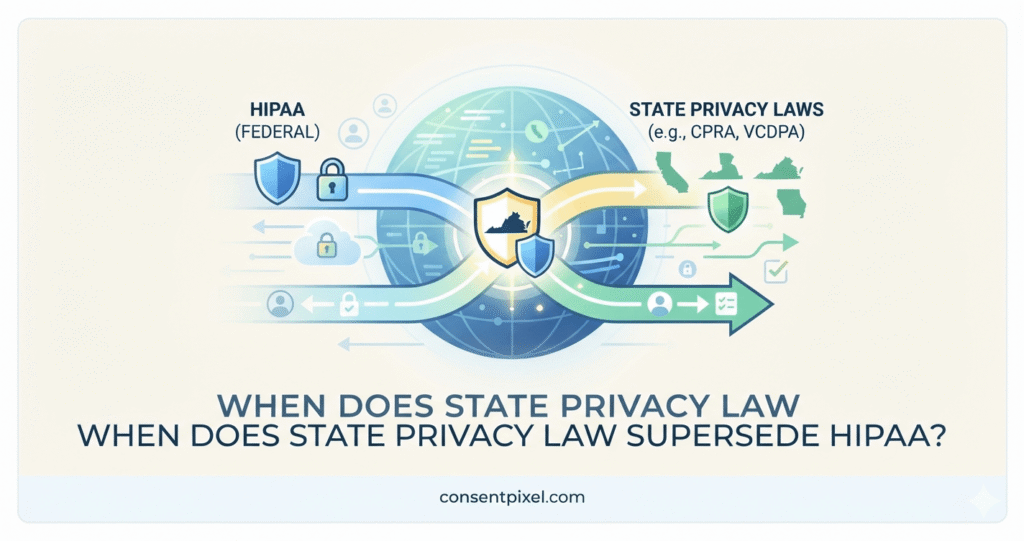
It’s the question every multi-state healthcare operator eventually asks — and the common answer is subtly wrong. State privacy law almost never replaces HIPAA. In the cases that matter most, it stacks on top of it. Here’s exactly when a state law controls, why “supersede” is the wrong mental model, and why the state layer — not HIPAA — is where the lawsuits actually land.

When Does State Privacy Law Supersede HIPAA? (2026 Guide) Read Post »

The Patient-Portal Pixel Settlements: When Trackers Follow Patients Past the Login
Healthcare

The Patient-Portal Pixel Settlements: MyChart & Logged-In Cases

The broader healthcare pixel wave is well documented. This is the sharper, more dangerous slice of it: cases where tracking pixels weren’t just on a hospital’s marketing pages but on the logged-in patient portal — the authenticated space where a real, named person manages their care. Wellstar, Banner, and LifeStance all settled exactly this. Here’s why portal tracking is the highest-risk configuration in healthcare, the cases that prove it, and what portal operators have to do.

The Patient-Portal Pixel Settlements: MyChart & Logged-In Cases Read Post »

Can You Be Sued for a HIPAA Violation?
Healthcare

Can You Be Sued for a HIPAA Violation? (Website Tracking, 2026)

It’s the question that follows every pixel headline and breach notice: if my website mishandled health data, can someone actually sue me? The honest answer has two halves — a reassuring one about HIPAA, and a much less reassuring one about the state laws stacked on top of it. Here’s exactly who can sue, under what law, and why website tracking is where the real litigation risk now lives.

Can You Be Sued for a HIPAA Violation? (Website Tracking, 2026) Read Post »

The Healthcare Pixel Litigation Wave: Every Major Settlement
Healthcare

The Healthcare Pixel Litigation Wave: Major Settlements (2026)

In under three years, tracking pixels on hospital websites went from an unremarked marketing default to the source of some of the largest privacy settlements in healthcare — from Mass General Brigham’s $18.4M to Kaiser’s $46M. Here are the settlements that defined the wave, the single pattern they all share, and what it means for any organization running a healthcare website today.

The Healthcare Pixel Litigation Wave: Major Settlements (2026) Read Post »

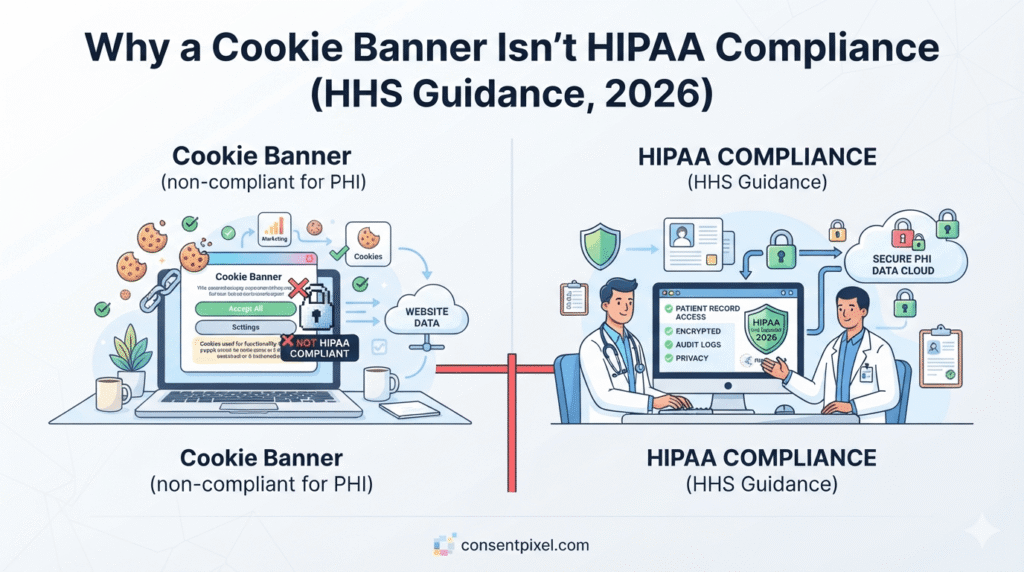
Why a Cookie Banner Isn't HIPAA Compliance
Healthcare

Why a Cookie Banner Isn’t HIPAA Compliance (HHS Guidance, 2026)

It’s the most expensive sentence in healthcare digital compliance: “we have a cookie banner, so we’re covered.” The federal regulator has said, in plain words, that a banner is not what HIPAA asks for. This guide walks through exactly what HHS said, what the 2024 court ruling did and didn’t change, and why the banner myth quietly leaves health systems exposed on the layers where the real money is lost.

Why a Cookie Banner Isn’t HIPAA Compliance (HHS Guidance, 2026) Read Post »

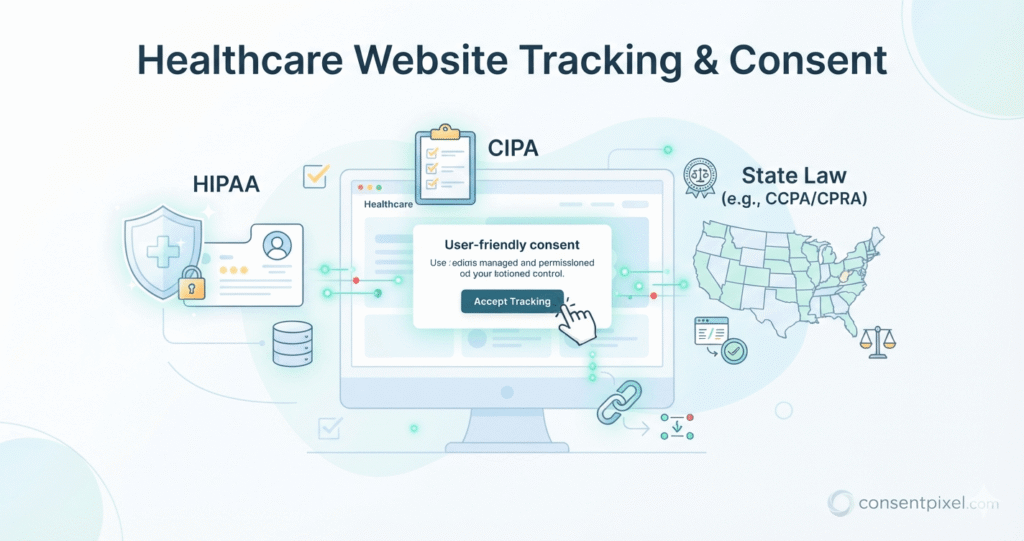
Healthcare Website Tracking & Consent: What HIPAA, CIPA & State Law Actually Require (2026)
Healthcare

Healthcare Website Tracking & Consent: What HIPAA, CIPA & State Law Actually Require (2026)

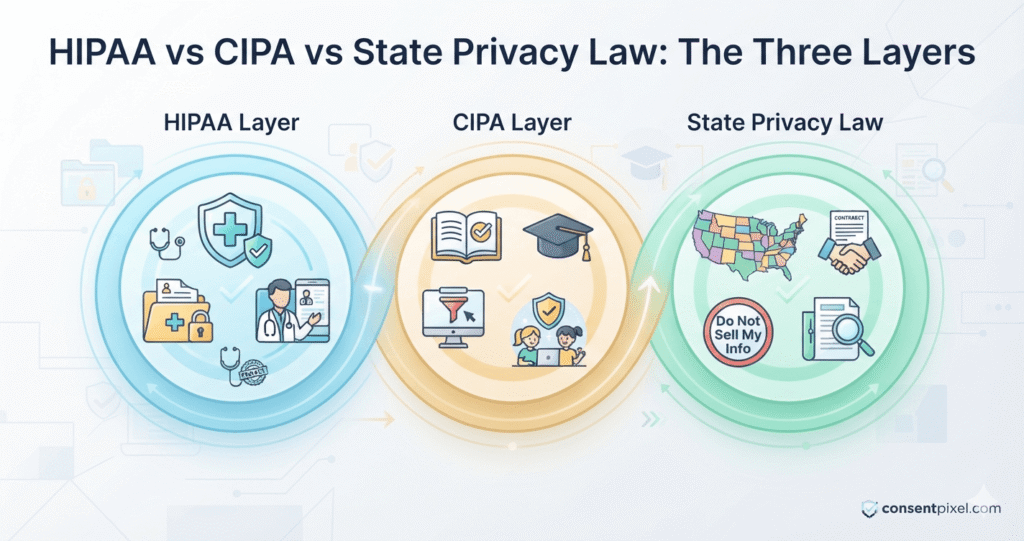
Health systems have paid more than $100 million settling website-tracking lawsuits — and most of those cases were not won or lost on HIPAA. They turned on state law. If you run a healthcare website, the single most expensive misunderstanding is believing a cookie banner makes you compliant. It doesn’t. Here’s the honest map of what actually governs the trackers on your site, and where the real exposure lives.

Healthcare Website Tracking & Consent: What HIPAA, CIPA & State Law Actually Require (2026) Read Post »

Scroll to Top