ConsentPixel – Privacy · Verified

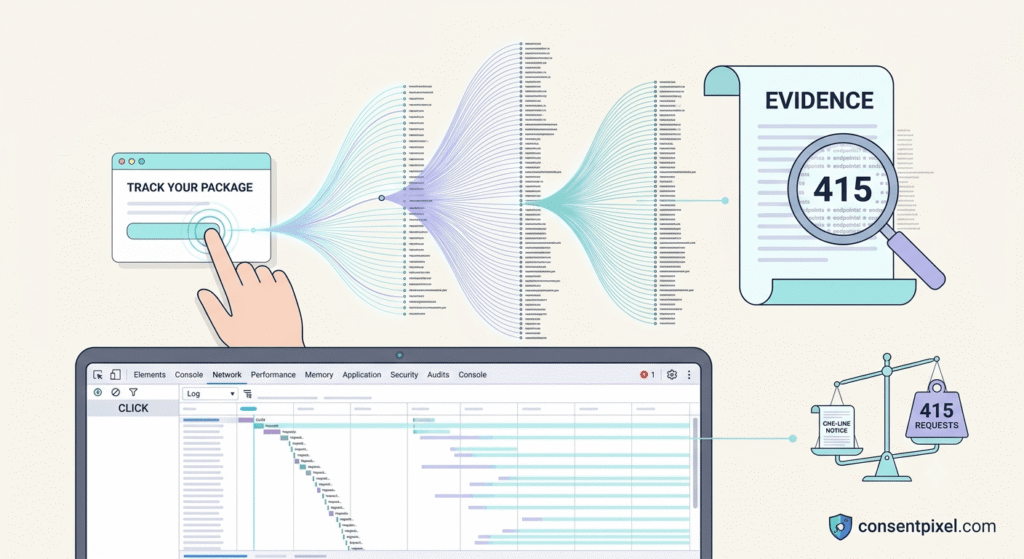
One click, 415 requests: the audit method that turns a one-line notice into evidence
Tracker Scanning

One click, 415 requests: the audit method that turns a one-line notice into evidence

A recent class action put a number on something most site owners never see. When a user clicked “track” on Google’s “track your package” widget, the complaint alleges, a single click set off 415 network requests for a UPS package — even though the interface promised that only the tracking number would go to the carrier. The gap between that one-line promise and 415 requests is the whole story.

One click, 415 requests: the audit method that turns a one-line notice into evidence Read Post »

A clean consent record doesn't mean a quiet browser — here's the data
Tracker Scanning

A clean consent record doesn’t mean a quiet browser — here’s the data

You can have a perfectly tidy consent record — a banner, a logged “accept,” a CMP dashboard full of green — and still be sending visitor data to ad platforms before anyone agreed to anything. The gap between what your consent records say and what the browser actually does is not a theory. In late 2026, two independent audits measured it, at scale, and the numbers are blunt.

A clean consent record doesn’t mean a quiet browser — here’s the data Read Post »

How to Audit Your Website's Trackers
Tracker Scanning

How to Audit Your Website’s Trackers (2026 Guide)

In October 2026, a class action alleged that a single “track my package” click in Google Search fired 415 network requests to at least 28 domains — while a one-line notice told users only their tracking number would be shared. The number made headlines. But the number isn’t the lesson. The audit method that surfaced it is — because you can run the same method on your own site today, for free, and find out exactly what fires before anyone consents. This guide shows you how, step by step.

How to Audit Your Website’s Trackers (2026 Guide) Read Post »

Scroll to Top